
Running a Sex Offender Check in Walton County
The GBI Georgia Sex Offender Registry is the main public portal. Filter it to Walton County for a county-wide view or use a name and location fields to narrow the result. The Walton County Sheriff's Office performs local registration and verification functions and receives reports of suspected noncompliance. Call emergency services only for an immediate threat.
The GBI registry page provides the official search entry. The source image appears below.
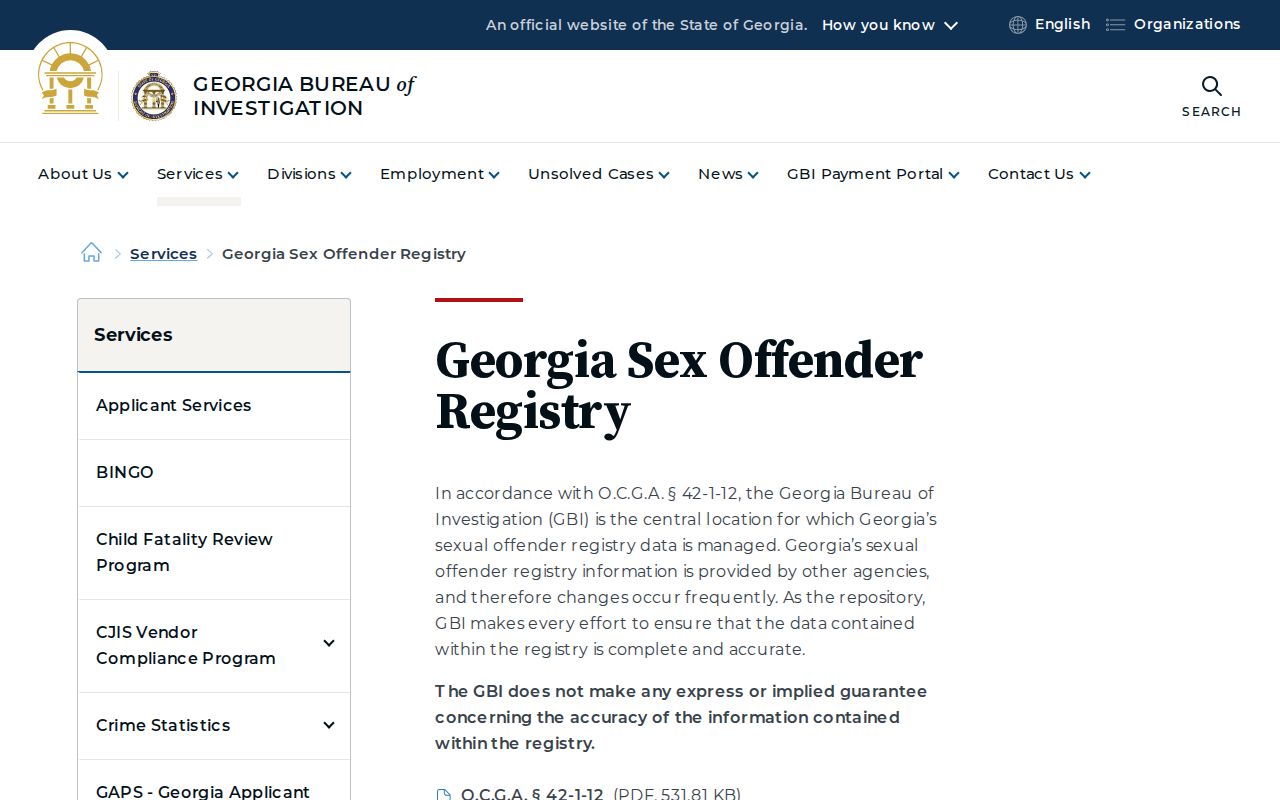
The state source should be checked directly because addresses, status, and verification dates can change. Search results may display a residence, county, registration agency, offense information, and compliance status. These are public statutory fields, not a real-time tracking service. Note the profile identifier and last verification date when asking the Walton sheriff about a specific discrepancy.
Begin with the broad Walton County filter when neighborhood awareness is the goal. A name query is better for a known person, while an offender identifier is the strongest exact key. Compare aliases, photograph, physical details, offense jurisdiction, and update date before deciding two similar names refer to the same profile. Never rely on an unofficial copied listing when the GBI source is available.
Walton Sheriff Verification Role
State publication and local compliance work are related but distinct. GBI operates the public registry, while the Walton County Sheriff's Office handles local registration, address verification, questions, and suspected noncompliance. A portal result may show the supervising or registration agency and a last update, but the sheriff is the proper contact for current local instructions.
Do not infer that an absent classification means low risk or that an old address remains current. Use the profile's date and status fields, then contact law enforcement when a compliance concern is specific and factual. Ordinary safety planning remains important even when no result appears. A clear search does not prove that no risk exists because registry coverage is set by law and records can change. Use the registry with normal family and neighborhood safeguards. If danger is immediate, call 911. For a non-emergency registration concern, give the sheriff factual details and avoid public accusation.
Searching the Georgia Sex Offender Registry
The registry supports both identity and geographic approaches. Use an offender identifier for the strongest exact query. A name search may require comparison of aliases and physical details. County, city, ZIP, address, and any radius control shown by the live portal can support neighborhood awareness.
- Open the GBI registry and read its conditions of use.
- Choose a name search or enter Walton County, a city, ZIP code, or address.
- Compare the results with aliases, physical details, and the registry identifier.
- Open the profile and read the offense, address, classification, status, and update fields.
| Field Label | Type | Required | Notes |
|---|---|---|---|
| Last name | Text | No | Partial or exact behavior should be checked live |
| First name | Text | No | Narrows results |
| City or ZIP | Text/select | No | Use Monroe, Loganville, Social Circle, or a ZIP |
| County | Select | No | Select Walton for county-wide results |
| Address or radius | Text/select | No | Use only controls and distances shown live |
NSOPW Beyond Walton County
The U.S. Department of Justice National Sex Offender Public Website federates searches across participating jurisdictions. It is useful when a person has moved, an address is near a county or state line, or Walton County is only one part of the search. It does not replace the details and local contacts on Georgia's own profile.
The official NSOPW search is shown in the source image below.
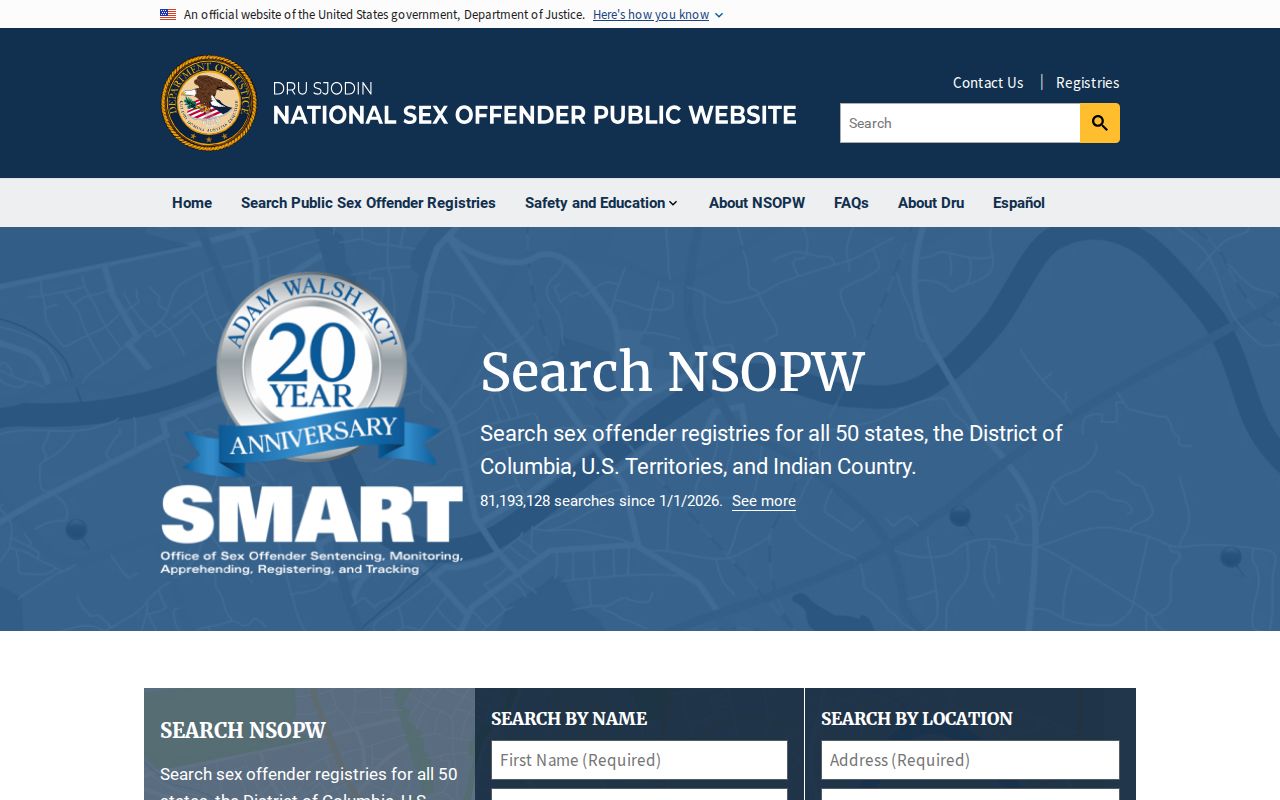
Compare any national result with the GBI profile and current Walton County verification channel.
When results differ, check the update date, registering jurisdiction, and profile identifier. A move may be reflected first in one participating system. Save the official result details and report a concrete conflict to the agency responsible for registration. Do not publish the discrepancy or visit the address to test it.
NSOPW depends on participating jurisdiction data. Its geographic view can help when a search area crosses county or state lines, but differences in update timing and display fields are possible. Open the linked state profile for the current detail. When a national and Georgia result conflict, report the concrete difference to the responsible registry agency.
What a Registry Profile Shows
A public profile can show a photograph, registered name and aliases, identifier, physical description, residence, county, compliance status, offense details, conviction and release information, and the registration agency. Some profiles also publish scars, marks, tattoos, vehicles, or other fields where Georgia law permits. Read the last verification date before relying on an address.
| Name & Aliases | Published registered identity and alternate names |
|---|---|
| Photo & Physical Description | Image and identifying traits allowed by law |
| Registered Address | Reported residence and county with update context |
| Offense & Statute | Description, jurisdiction, conviction date, and related data |
| Level / Tier | Georgia risk classification when assigned |
| Registration Status | Compliance, absconded flags, and verification dates where shown |
Reading Walton Registry Dates
A profile can contain several dates with different meanings: conviction, release, registration, last verification, and last update. None alone proves a person is at a listed place today. Compare the status flag with the update fields and report a concrete discrepancy to the sheriff rather than confronting anyone.
Report suspected noncompliance with the profile identifier, displayed address, date observed, and the specific discrepancy. Do not investigate by approaching a listed residence. The sheriff can compare the report with nonpublic information and decide whether verification steps are warranted.
Profiles can also identify the offense jurisdiction and victim-age category when authorized. Those fields provide context, but the registry is not the full court file. The Walton or originating court holds the judgment and pleadings. The profile may show a conviction date, release date, registration date, last verification, and last update. Each date answers a different question. An old update calls for official verification, not confrontation. A status flag should be read with the agency and date that produced it. Public registry entries should not be expanded through rumor or unofficial people-search sources.
Map pins also have limits. A point represents published address data, not a real-time location or a complete measure of risk. Search a wider area near a county line, then compare Georgia results with NSOPW if another state may be involved.
Registration Requirements and Levels in Georgia
Georgia should not be described with federal SORNA Tier I, II, and III labels. The state uses statutory registration categories and risk classification by the Sexual Offender Registration Review Board. These include Level I, Level II, and sexually dangerous predator classifications. Registration is generally for life, with limited petition or removal paths for qualifying people under current law. Verification duties vary, so confirm the live profile and sheriff instructions. Georgia registration is generally for life, but state law provides limited petition and removal paths for qualifying people after specified periods. A public searcher should not decide eligibility from the profile. Classification, duration, and relief depend on the statute, judgment, assessment, and current legal status.
An unclassified or pending entry does not mean the lowest risk level. It may reflect an older case or an assessment that is not final. Petition eligibility and registration duration depend on current Georgia law and the individual judgment.
| Level / Tier | Duration | Verification Frequency |
|---|---|---|
| Level I | Generally lifetime unless relieved by law | Confirm current statutory and sheriff duties |
| Level II | Generally lifetime unless relieved by law | Higher-risk classification; confirm current duties |
| Sexually Dangerous Predator | Generally lifetime unless relieved by law | Enhanced monitoring and notification requirements |
| Unclassified or pending | Depends on statutory treatment | Do not infer low risk from an absent label |
Walton Safety and Victim Resources
Registry checks are one part of a safety plan. Walton County also publishes crime-victim rights and protection material for people navigating the justice system. Registry information does not establish a current offense, and it should never prompt direct contact or vigilantism.
The county's victim-rights and protection page is shown below.

The official resource connects community awareness with lawful support and reporting channels. Victims may need court, prosecutor, or law-enforcement services that a registry search cannot provide. The county material explains rights and procedure, while the registry answers a narrower location and status question. Keep those functions distinct when choosing the next office.
A clear search does not guarantee that no risk exists. Registry coverage is defined by law, addresses can change, and not every harmful act results in a registrable conviction. Combine the official search with ordinary family and neighborhood safety practices.
Lawful Use and Community Notification
Registry information supports public safety and community awareness. It does not prove current criminal conduct. Addresses and status can change, and classification has a defined statutory meaning. Report suspected noncompliance to the Walton County Sheriff's Office. Call 911 only when danger is immediate. Never threaten, harass, intimidate, or attempt to enforce registration law personally.
Use registry data lawfully: Harassment, threats, vigilantism, or using registry information to commit a crime is unlawful under Georgia law. Report concerns to law enforcement.
When results differ, compare the registry identifier, update date, registering jurisdiction, and status. A move can appear in one participating system before another. Save the official details and report a concrete conflict to the responsible agency. Do not publish the discrepancy or visit an address to test it.