
Criminal Cases in Walton County Courts
Walton County has no single criminal court counter for every matter. Superior Court is the felony-level trial court. Its Criminal Division files warrants, citations, accusations, indictments, pleas, dispositions, and sentences in felony and misdemeanor prosecutions. Walton belongs to the Alcovy Judicial Circuit with Newton County. The clerk's file is the best source for what prosecutors filed and how a judge resolved the case.
Magistrate Court handles warrants and preliminary criminal work. Municipal courts retain city ordinance, traffic, and other matters within their jurisdiction. Juvenile records are generally restricted. The county's official court directory helps readers route a request. The source image follows.
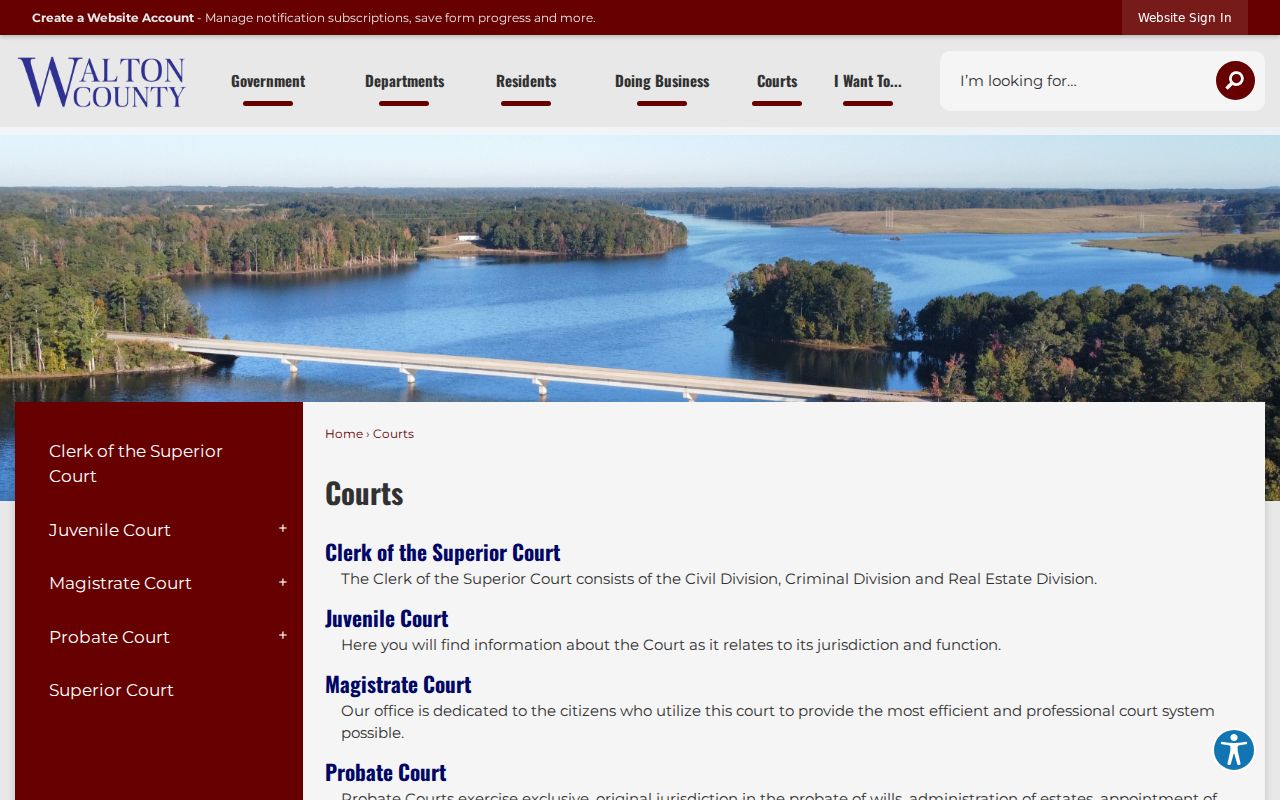
The directory is the practical first stop when the correct court is uncertain.
Walton belongs to the Alcovy Judicial Circuit with Newton County, but the county shown on the caption still controls where a local file is kept. The prosecutor, defense office, arresting agency, and clerk perform different jobs. Police document the allegation, the prosecutor chooses filed charges, defense counsel represents the accused, and the judge enters orders. The clerk preserves the public court record. Sending a clerk request to the prosecutor or asking the jail for a judgment delays the search.
Venue controls the next step. Magistrate Court handles warrants and preliminary functions. Superior Court holds the filed felony and circuit prosecution. A municipal court keeps its own ordinance, traffic, and qualifying misdemeanor matters. Juvenile Court records are generally restricted. The case caption, issuing agency, citation, or warrant number can reveal which branch owns the file. When those clues conflict, call the listed clerk before paying for copies.
Walton Magistrate Warrant Views
Walton Magistrate Web Case Management provides public views for Magistrate cases and criminal warrants. It can reveal a case or warrant number, issue date, status, and other fields shown by the live interface. Walton County states that criminal warrants have used EZ Warrant since January 1, 2013. The public system does not provide document viewing, so a search result cannot replace a filed order or certified copy. Printing through the portal carries a fee, but the amount was not stated on the current county notice. View the result first, note the exact warrant or case number, and ask the clerk for a price before requesting paper. Old bookmarks may fail because the official case-search address changed on December 18, 2023.
The county's criminal-case access explanation states that limit. Its captured page appears below.
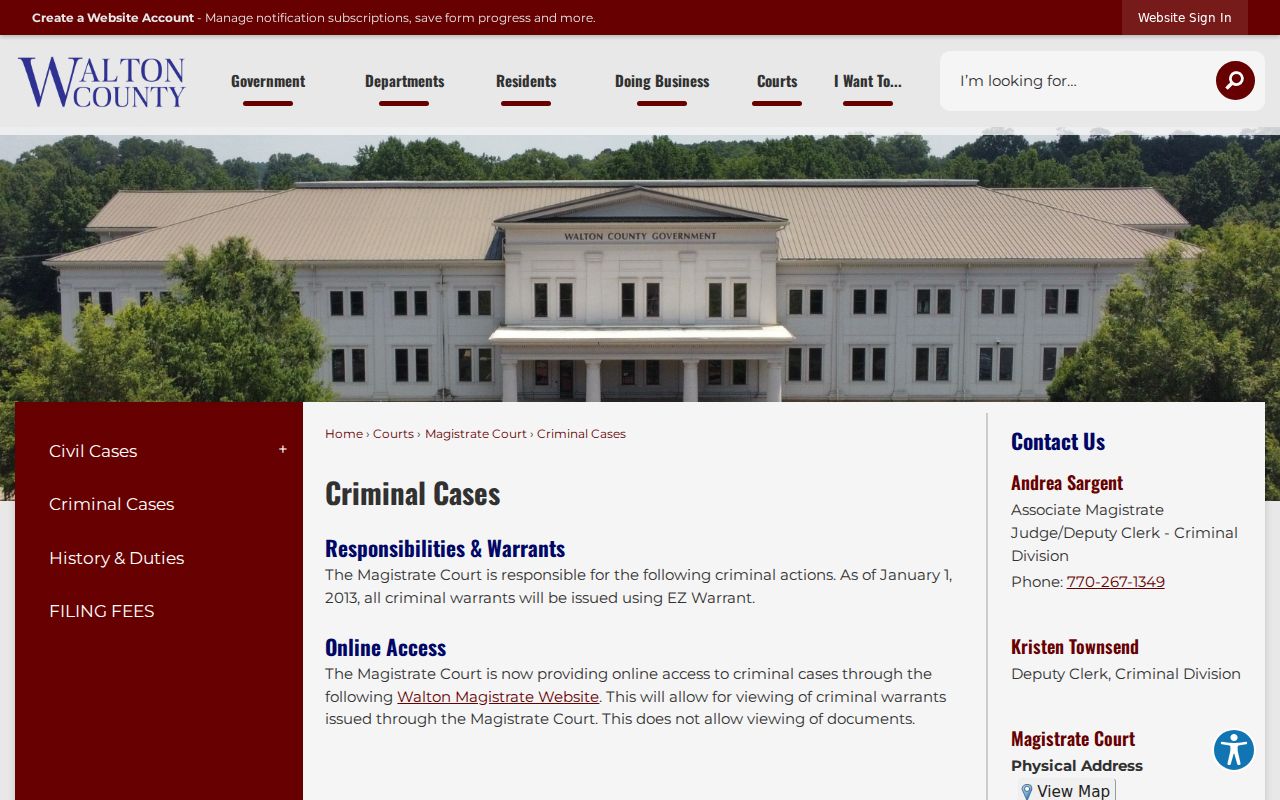
Use the result to identify the matter, then contact the correct clerk for documents.
A public warrant status can lag service or cancellation. Anyone resolving their own warrant should confirm the issuing court, case number, current status, bond instructions, and appearance steps by phone. A municipal failure-to-appear warrant must be checked with the city court that issued it.
How to Search Case Records
Begin with venue, not a broad name query. The Georgia Judicial Gateway is an official access directory, not one complete statewide criminal docket. A Magistrate warrant or preliminary matter belongs in the Walton Magistrate system. A filed prosecution belongs with the Superior Court criminal clerk. A city citation can remain with the relevant municipal court.
- Decide whether the matter is Magistrate, Superior, municipal, or juvenile.
- Search Magistrate cases and warrants online when that court is involved.
- Give the Superior Court criminal clerk a legal name, filing year, or exact case number.
- Request the docket and disposition before ordering every page.
- Ask about free inspection and obtain an estimate for plain or certified copies.
| Field Label | Type | Required | Notes |
|---|---|---|---|
| Last name | Text | No | Confirm identity in common-name results |
| First name | Text | No | Narrows a party search |
| Case or warrant number | Text | No | Strongest exact key when known |
| Filing or issue date | Date | No | Helps separate similar matters |
| Case type or year | Select | No | Use only options shown by the live system |
Walton Criminal Clerk Records
The Superior Court criminal desk can search with a legal name and approximate filing year, though a case number is better. Ask first for the docket and disposition. Those records often show whether an accusation or indictment was filed, what counts remained, and how the court closed the matter. Current official copy and certification amounts were not found, so request a written estimate.
The clerk's official description identifies its criminal filing work. The source image documents that role.
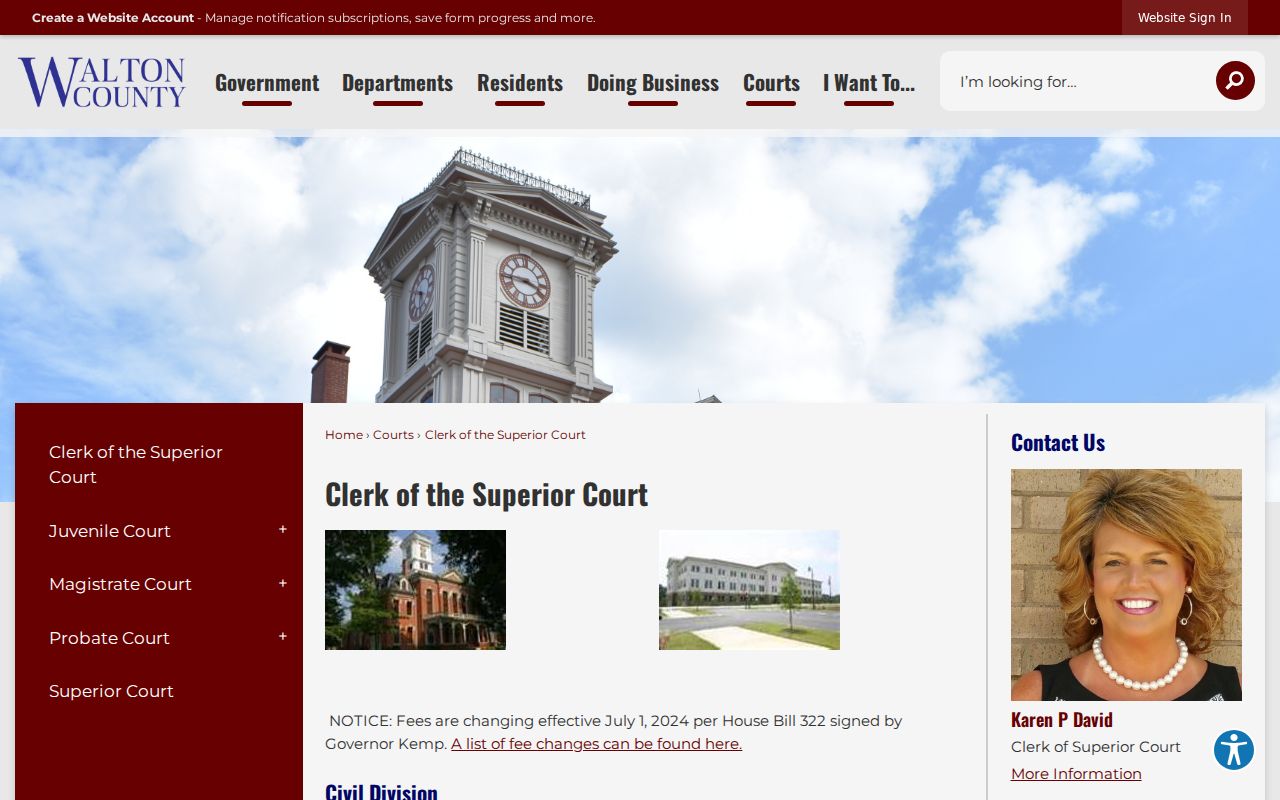
This office is the key source when an online summary cannot supply a filed document or certified result.
Requesting the docket before every document can reduce cost and show which filings matter. A certified disposition proves the recorded outcome, while a plain copy may be enough for personal research. Ask the clerk which form meets the intended official need.
What the Case File Shows
A Walton County case file has layers. The header identifies the number, filing date, court, type, and status. Party entries identify the State of Georgia, defendant, and public attorney appearances. Charge rows can show counts, statutes, classifications, and accusation or indictment dates. The docket lists hearings, motions, pleas, trial events, judgment, sentence, and later probation activity.
| Case Number & Court | Unique identifier and the court holding the file |
|---|---|
| Charging Document | Accusation or indictment stating filed counts |
| Docket Entries | Chronological filings and court events |
| Hearing Dates | Arraignment, motion, calendar, plea, or trial settings |
| Disposition & Judgment | Plea, verdict, dismissal, acquittal, or other outcome |
| Sentence & Conditions | Custody, probation, fines, and restitution where public |
Magistrate Counter in Monroe
Walton Magistrate Court is at 303 South Hammond Drive, Suite 116, Monroe, Georgia 30655. Its phone is 770-267-1349 and fax is 770-266-1512. Calling first can confirm whether a matter is held there and whether the requested item is online or available only through the counter. Provide the case or warrant number when possible.
The county's Magistrate contact page posts current routing information. The captured source appears below.
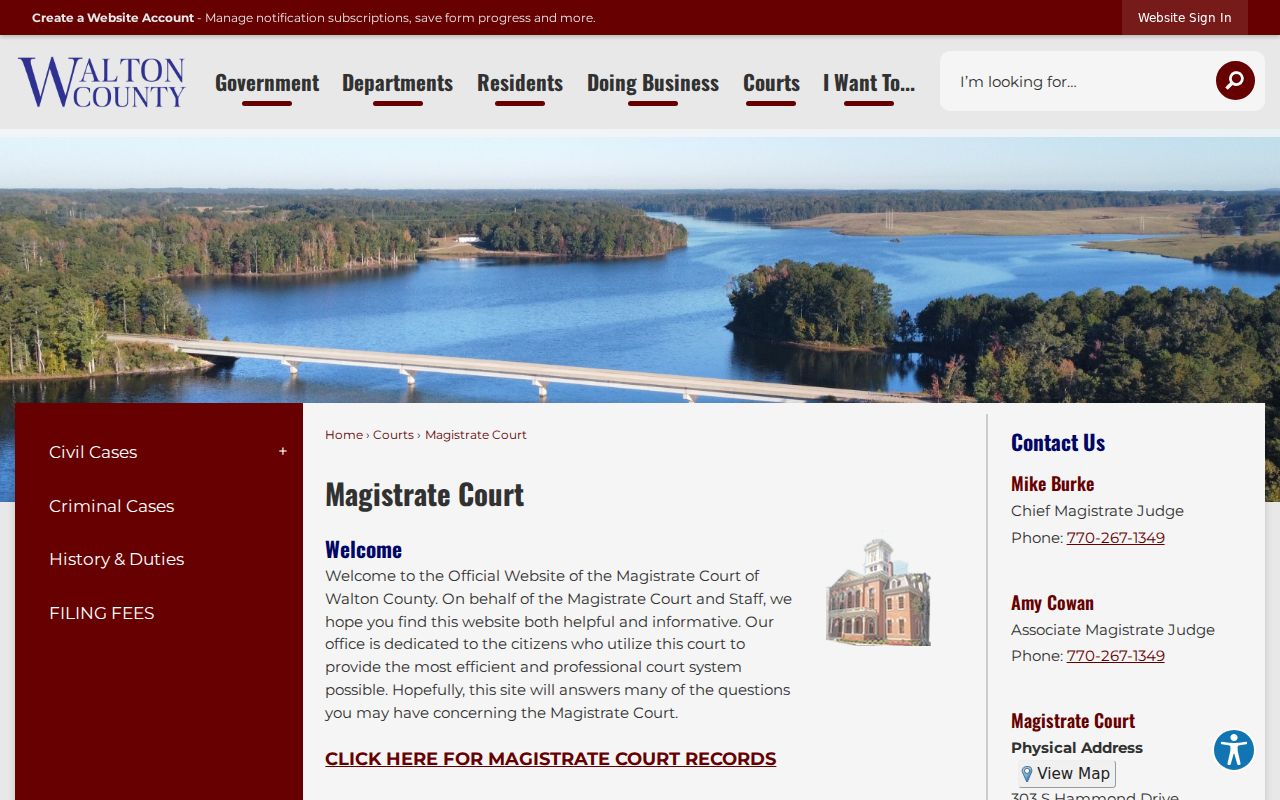
Direct contact matters when a result lacks documents or a status needs confirmation.
Ask in advance about interpreter or accessibility arrangements and whether inspection is free. Current counter hours and copy charges were not verified in the research, so confirm them before travel.
Stages of a Criminal Case
A Walton prosecution changes as it moves. Arrest charges are an initial account. The prosecutor may file different counts through an accusation or indictment. At arraignment, formal charges are addressed and a plea is entered. Pretrial motions can shape what reaches a plea or trial. The signed orders and judgment provide more authority than a brief status label.
A first appearance addresses rights, counsel, and bond soon after custody. It is not a trial. An arraignment is the stage where formal charges are addressed and a plea is entered. Motions and calendar events can follow before a negotiated plea or trial. The outcome must then be reported so GCIC can connect the arrest cycle with the disposition. Delays in that reporting explain why the court file and state history may temporarily disagree.
Case flow: Charges Filed › Arraignment › Pretrial › Plea or Trial › Disposition › Sentencing
Reading Walton Case Outcomes
A disposition is the outcome of a charge or case. A nolle prosequi means the prosecutor formally chose not to pursue a charge at that time. A dismissal ends a charge without conviction, while an acquittal is a not-guilty result after adjudication. A conviction follows a guilty plea or verdict. Do not treat an open status as final or assume every arrest count became a filed charge.
Sentence rows may include confinement, probation, fines, costs, or restitution. Concurrent terms run at the same time, while consecutive terms run one after another. When precision matters, request the signed judgment. A certified disposition is also useful when reviewing one own GCIC history and correcting a missing or mismatched outcome. If the public case status remains open after a final order, note the case number and filing date, obtain the certified outcome, and ask the clerk about the docket entry. If GCIC is wrong, use the same disposition with the contributing agency or state correction process. Fixing one system does not always update every other source at once.
Financial entries can include court costs, surcharges, and restitution, but a balance is not the judgment itself. Event rows may show later probation or revocation activity. Protected birth-date elements, Social Security numbers, victim details, and sealed matter should be redacted from public access.
Case Record Access and Restrictions
Georgia court records are generally open, subject to court rules and statutory limits. Public views should not expose full Social Security numbers, protected birth-date elements, victim or minor identifiers, sealed material, or other protected data. Juvenile matters are generally restricted. A missing result can also reflect the wrong court, a spelling issue, a reporting lag, or an index that does not host documents.
Use the Georgia Open Records Act guidance for agency records and the Georgia Court Records Rules for judicial files. Identify the case, ask for electronic delivery if offered, and seek a written estimate. If a Walton County case is sealed or restricted, the clerk can state what is public but cannot give legal advice.